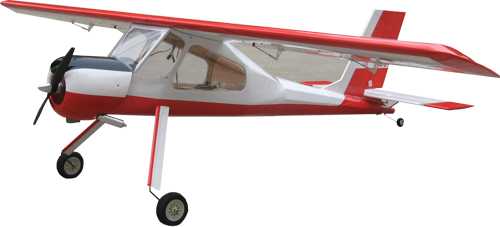
PZL-104 Wilga (Golden Oriole) is a Polish short-takeoff-and-landing (STOL) utility aircraft designed and built by PZL "Warszawa-Okecie"; in one version or another, the Wilga has been in continuous production from 1962 to the present.
The PZL-104 was designed mainly for use in sports aviation, especially for glider-towing and parachute training. The prototype of the initial Wilga 1 variant was first flown on April 24, 1962. It used a Polish 220 hp flat engine PZL WN-6RB. The Wilga 1 revealed numerous faults, the most serious of which were that it was too heavy and the crew could not see a towed glider. As a result, the airframe was thoroughly redesigned by a team led by Bronislaw Zurakowski and Andrzej Frydrychewicz, retaining only the general composition and part of wings in common with the initial design. A completely new slimmer, strengthened fuselage was provided, which offers an excellent view for the crew. Side doors open upwards and it is possible to fly with doors open for a better observation or performing parachute jumps.
The new variant, PZL-104 Wilga 2, flew first on August 1, 1963. A short production run followed (later converted to the Wilga C and Wilga 3 configurations). On December 30, 1963 the Wilga C (or Wilga 2C), an export variant for Indonesia, was flown.
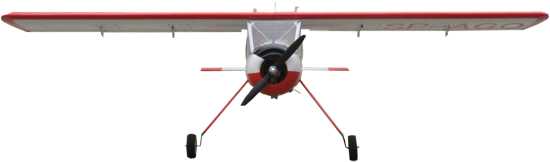
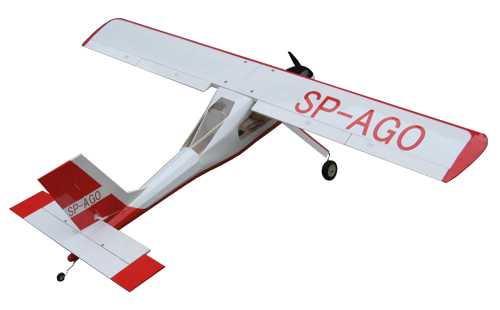
This kit comes in ARF versions, everything you need for ready to fly must be purchased seperately