The Sopwith Camel, along with the Fokker Dr.1, is one of the most well-known aircraft of not only the First World War, but of any era. Thanks to a cartoon beagle, the Camel has transcended aviation circles and become something of a pop culture icon too.
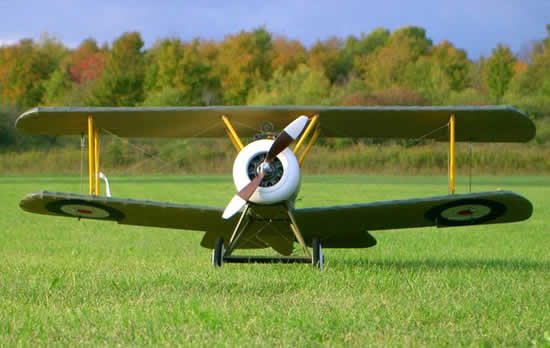
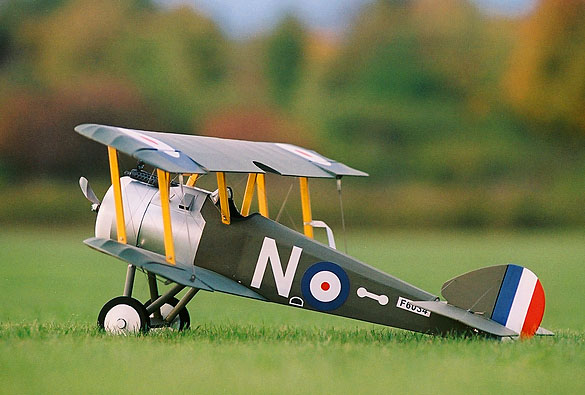
Designed by Herbert Smith of Sopwith Aviation and designated the F 1, the Camel received its nickname from the hump shaped covering enclosing twin Vickers machine guns fitted on top of the fuselage and firing through the propeller arc. Another distinctive feature of the squatty little biplane is the straight upper wing and significant dihedral of the lower wing.
The Camel was often powered by a 130 h.p. Clerget rotary engine and this contributed to its terrific maneuverability. With a rotary, the entire engine revolves at high speed with the propeller. This great clockwise spinning mass allowed the Camel to make extremely tight right-hand turns. It also caused many fatal accidents for pilots learning to fly the aircraft. Anyone who’s had the fortune to see and hear a vintage rotary in action won’t soon forget the experience.
First joining frontline service in 1917, the Camel proved a match for any other aircraft of the war. With nearly 5,500 built it was the most successful scout aircraft of the period in terms of number of enemy destroyed.
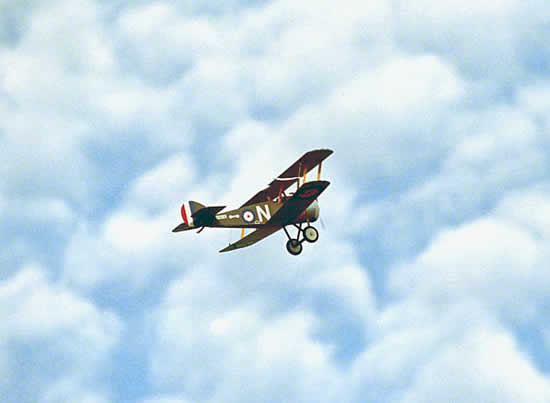
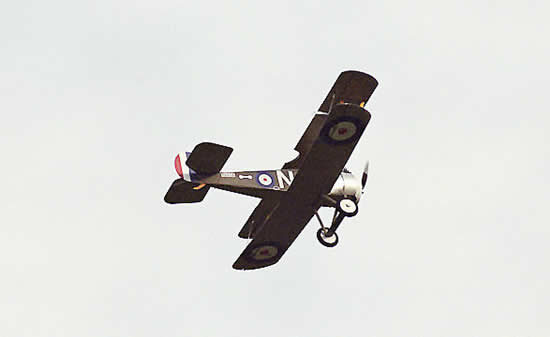
The Silver Arrow Hobby Models Camel carries the markings of an aircraft flown by American ace George Vaughn. A replica of this Camel, built in the 1970s from original plans and drawings, is on display at the United States Air Force Museum in Dayton, OH. Vaughn is well-known to WWI aviation buffs as one of the highest ranking American aces with 13 kills; six of those while flying Camels. Born in Brooklyn, NY, Vaughn first flew with the RAF before joining the 17th Aero Squadron of the newly created USAS. According to records he was flying Camel 6034 on September 22nd, 1918 when he shot down two Fokkers during an attack in which his group was outnumbered five to one. For this action, and another encounter on September 28th, Vaughn was awarded the DSC